Web personalization: creating relevant digital experiences
Web personalization focuses on delivering a tailored user experience across digital platforms such as websites and portals. Instead of showing the same content to every visitor, users see information, recommendations, and messages that are relevant to their profile, behavior, and needs.
This enables:
-
More relevant content for each user
-
Targeted marketing campaigns
-
Up- and cross-selling opportunities
-
A clearer, more intuitive user experience
The challenge: limited customer insight
Many organizations struggle to personalize their digital platforms because:
-
Past user behavior is not tracked or stored
-
There is no user-level behavioral data
-
Technology to capture and activate this data is missing
-
There is no clear personalization strategy
As a result, all users see the same content, often leading to information overload and missed commercial opportunities.
From generic to personalized: a structured approach
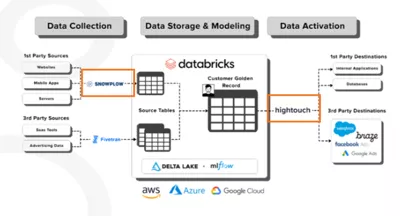
Web personalization starts with building a Customer 360° view by collecting and unifying behavioral and profile data:
-
Tracking user behavior
The right tools and tracking mechanisms (such as cookies and event tracking) are installed to capture user interactions on the website. -
Unifying data in a Customer Data Platform (CDP)
A CDP is used to store and combine real-time behavioral data with customer and profile information, creating a single, consistent view of each user. -
Data activation
Based on this unified data, personalized content is pushed to specific users or segments. This includes content recommendations, targeted campaigns, and personalized page elements.
Concrete example: personalized content at profile level
Consider a user logged into a digital platform. Based on their profile and past behavior:
-
Only relevant documents are shown on their dashboard
-
Irrelevant or overly complex information is hidden
-
Content adapts to their needs without overwhelming them
This ensures users quickly find what they need, while the platform remains focused and easy to navigate.
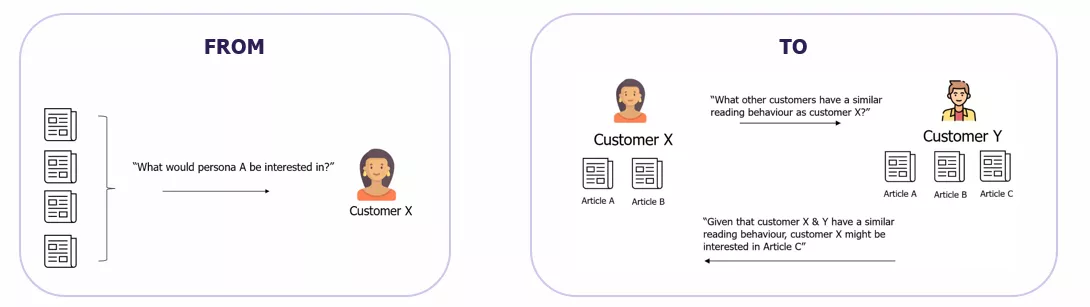
Result: better experience and better outcomes
By implementing web personalization supported by a CDP, organizations move from static websites to dynamic digital experiences. Users receive relevant content, marketing becomes more effective, and digital channels become a direct driver of engagement and revenue.

 View Case