

What does the Fivetran + dbt Labs merger mean for data teams
The Fivetran + dbt Labs merger is officially complete. For data teams, this is more than a technology-market announcement. It brings together two capabilities that were already highly complementary in many modern data platforms: automated data movement and governed data transformation.
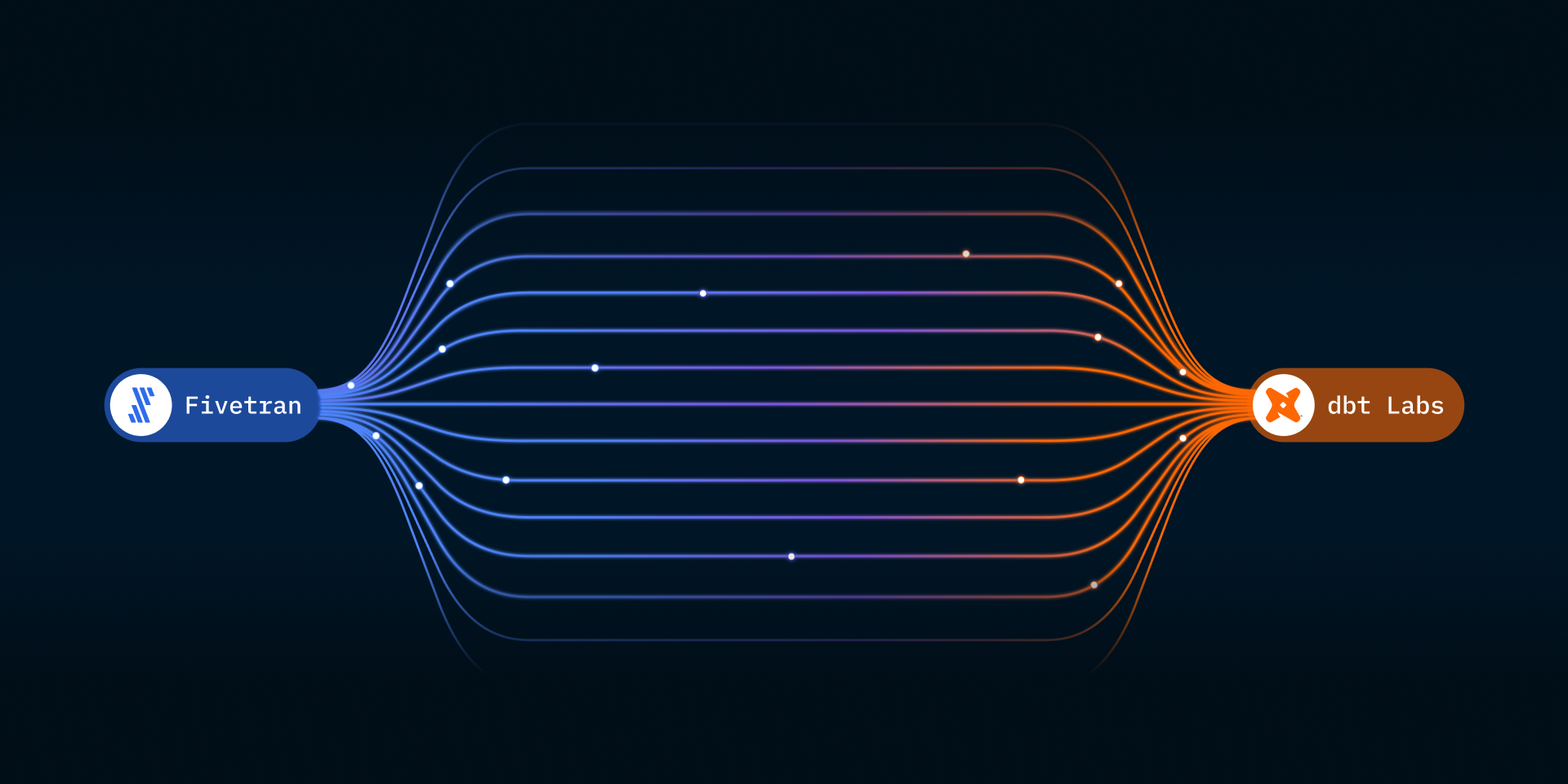
Fivetran helps organisations move data reliably from source systems into a cloud data warehouse or lakehouse. dbt helps transform that data into clean, tested, documented and reusable business logic.
Together, they address a challenge many organisations recognise: data only becomes valuable when it is reliable, well-modelled, governed and trusted by the people and systems that use it.
At element61, we see this merger as a useful moment for customers to reassess their data foundation: how data is ingested, transformed, tested, documented and prepared for analytics, business intelligence and AI use cases.
How do Fivetran and dbt work together in practice
Modern data platforms usually follow a clear flow: data is extracted from operational systems, loaded into a cloud platform, transformed into reusable models and consumed through dashboards, reports, applications or AI services.

At element61, we have implemented Fivetran for multiple customers to automate data extraction and ingestion processes. With its broad connector ecosystem (750+ connectors), Fivetran provides a SaaS-based approach to data movement, reducing the need to build and maintain custom extraction logic.
In practice, this saves us significant engineering and consulting effort, especially around custom incremental loading, pipeline maintenance, schema handling and monitoring. Instead of spending time on repetitive ingestion logic, data teams can focus more on modelling, governance and delivering business value.
dbt supports the transformation layer: the “T” in the ELT process. At element61, we have also implemented dbt projects for clients, including in the context of large-scale migrations. From that experience, dbt’s value is not only that it runs SQL transformations. Its real strength is the structure it brings to the development process.
Models become modular, dependencies are clear, testing and documentation are part of the workflow, and CI/CD becomes more straightforward once the right project configuration are in place. dbt also makes it easier to understand model dependencies and automate transformation flows, helping teams manage complexity as the platform grows.

In simple terms: Fivetran helps automate the movement of data, while dbt helps organise and govern the logic that turns that data into trusted, reusable data products.
Why does this merger matter now
The merger reflects a broader shift in the data market. Customers no longer want to treat ingestion, transformation, orchestration, quality, governance, metrics and AI readiness as separate problems. They need an end-to-end data foundation that connects source systems to trusted business outcomes.
This is becoming even more important in the age of AI and agents. AI systems need more than access to data; they need fresh, well-defined, governed and contextual data. If definitions are inconsistent or lineage is unclear, AI outputs can quickly become unreliable.
That is why the merger matters. Fivetran and dbt Labs are positioning themselves around trusted, open and scalable data infrastructure for the next generation of analytics and AI.
AI systems are only as reliable as the data foundation underneath them.
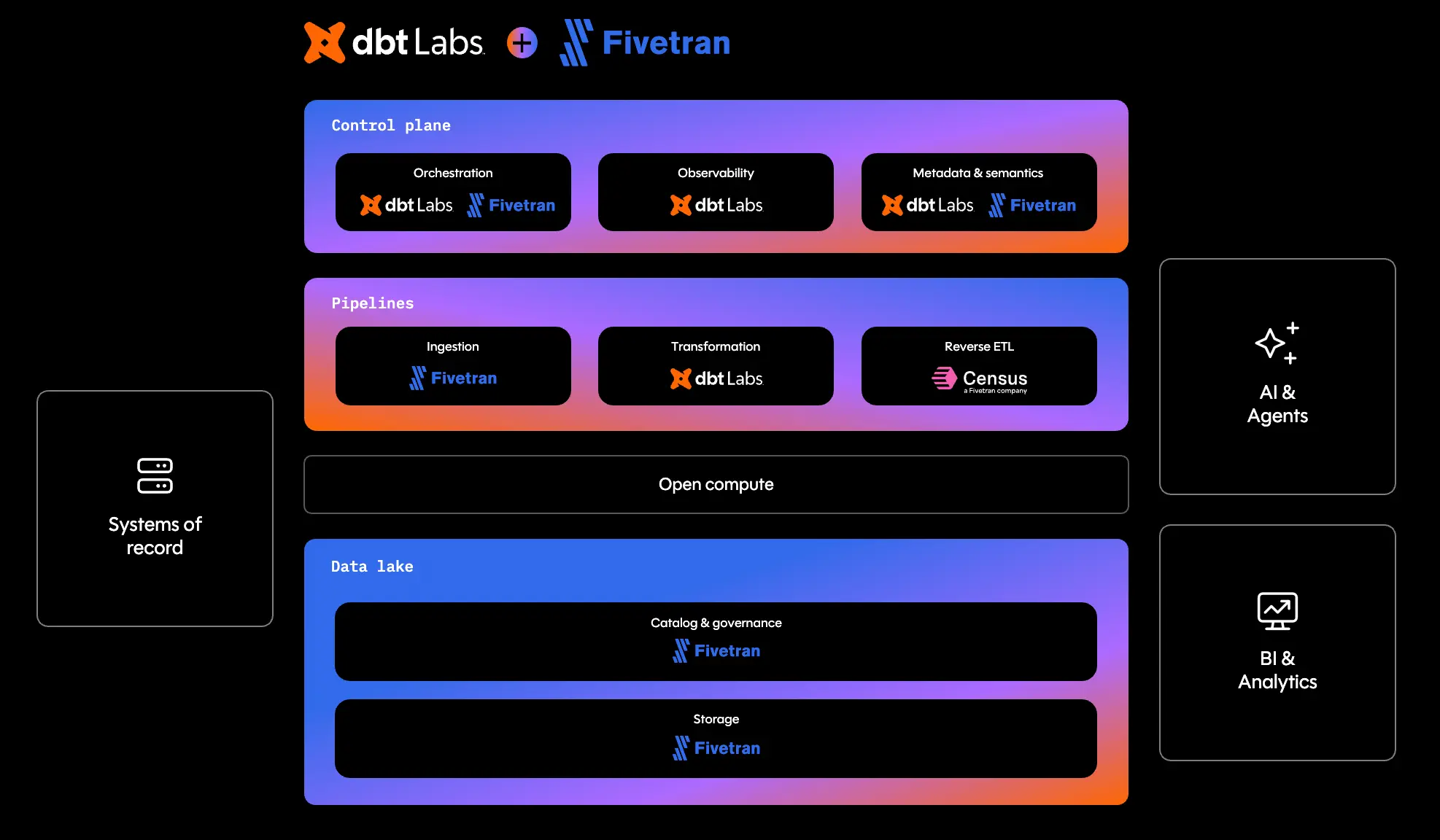
The combined company is positioning itself around an end-to-end data infrastructure layer, as illustrated below:
What opportunity does this merger create for customers
From our perspective, the opportunity is clear: if Fivetran and dbt become more connected, customers could get a smoother path from source data to trusted data products. This can reduce manual handovers between ingestion and transformation, improve visibility across the pipeline and make analytics engineering more scalable.
The merger creates a stronger starting point, but not a finished data platform.
The value for customers will come from how Fivetran and dbt are implemented together: with the right architecture, clear ownership, good modelling practices and a focus on trusted data products.
A more connected ingestion-to-transformation workflow
The exact product integration is still not fully clear. However, the direction is clear: bringing automated data movement and governed transformation closer together. Over time, this could mean stronger metadata flow, clearer lineage and better visibility from source systems to downstream data products. We believe this should lead to stronger visibility from source systems to trusted data products.
More focus on trusted business logic
dbt’s real strength is the structure it brings to data transformation: modular models, clear dependencies, built-in testing, documentation and smoother CI/CD. Compared to scattered SQL across scripts, stored procedures, notebooks or dashboards, dbt creates a more disciplined way of working. This improves maintainability, collaboration and trust.
Continued commitment to open-source foundations
dbt’s open-source foundation remains one of the key parts of the ecosystem, and the release of dbt Core 2.0 alpha on the Fusion engine shows that innovation is still happening in the open.
For customers, this matters because it supports openness, extensibility and flexibility. Combined with Fivetran’s long-standing contributions to dbt open-source packages, it reinforces the idea that the merger is not only about a combined platform, but also about strengthening the wider data practitioner ecosystem.
Better readiness for AI
This matters even more when organisations start experimenting with generative AI, conversational BI and agentic workflows. These initiatives often hit the same barrier: the AI layer is only as reliable as the data foundation underneath.
The same capabilities needed for good analytics — reliable ingestion, clean models, tested logic, documentation, ownership and governance — are also the foundation for future AI use cases. In that sense, AI readiness starts with data readiness.
What should you take away
As with any merger, not every detail is clear immediately. It is still too early to say exactly how Fivetran and dbt will be integrated from a product and platform perspective.
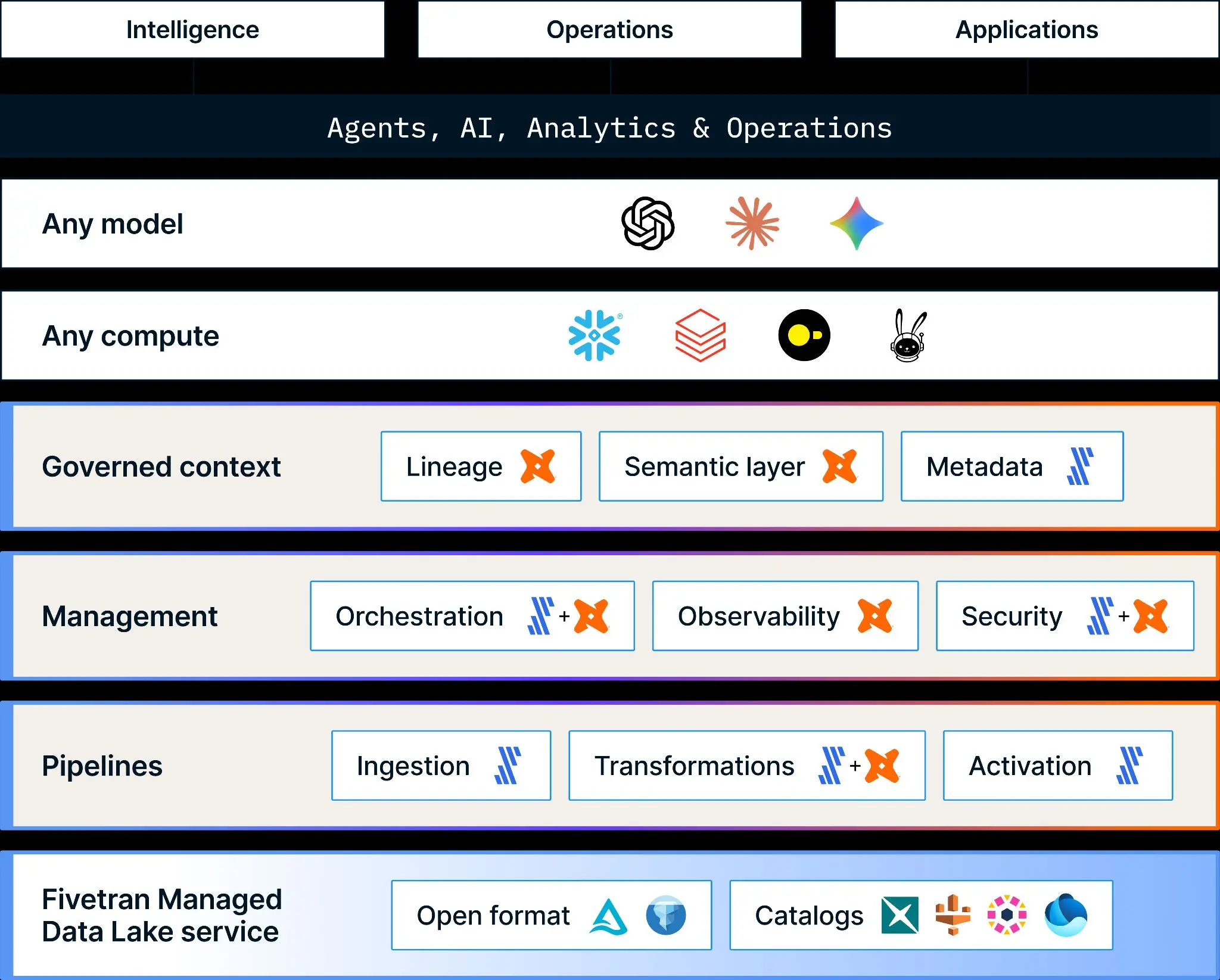
What is clear is the direction of travel: closer alignment between ingestion, transformation, metadata, lineage and orchestration.
For customers, this could mean less custom pipeline work, stronger transformation governance and a more reliable data foundation for analytics and AI.
We strongly believe this merger is especially relevant because we have implemented both Fivetran and dbt in customer environments and have seen the value of each tool separately. Seeing them come closer together is an interesting development and opportunity for us and for our customers, and we look forward to seeing how the combined ecosystem evolves.
As a combined partner for Fivetran and dbt, element61 can help organisations assess where they stand today, identify gaps across ingestion, transformation, testing, documentation and governance, and define a practical roadmap towards a more reliable modern ELT architecture. Contact us now!
FAQ
The Fivetran and dbt Labs merger is now officially complete, combining two complementary capabilities: automated data movement and governed data transformation. Fivetran moves data reliably from source systems into a cloud data warehouse or lakehouse, while dbt transforms it into clean, tested, and documented business logic. Together they form a stronger, end-to-end foundation for modern data platforms and AI.
Fivetran automates data extraction and ingestion, moving data from operational systems into a cloud data warehouse or lakehouse. With a broad connector ecosystem of more than 750 connectors, it offers a SaaS-based approach that reduces custom extraction logic, incremental loading, pipeline maintenance, and schema handling. element61 has implemented Fivetran for multiple customers to save engineering effort and let teams focus on delivering business value.
dbt supports the transformation layer, the "T" in the ELT process, turning raw data into clean, reusable data products. According to element61, its real strength is the structure it brings: modular models, clear dependencies, built-in testing, documentation, and smoother CI/CD. This disciplined approach replaces scattered SQL across scripts and notebooks, improving maintainability, collaboration and trust in the data.
In a modern data platform, data is extracted from operational systems, loaded into a cloud platform, transformed into reusable models, and consumed through dashboards, reports, or AI services. Fivetran automates the movement of data, while dbt organises and governs the logic that turns that data into trusted, reusable data products. This reduces manual handovers between ingestion and transformation and makes analytics engineering more scalable.
The merger reflects a broader market shift: customers no longer want to treat ingestion, transformation, orchestration, quality, governance, and AI readiness as separate problems. They need an end-to-end data foundation connecting source systems to trusted business outcomes. We see the merger as a useful moment to reassess how data is ingested, transformed, tested, documented, and prepared for analytics, business intelligence, and AI.
AI systems need more than access to data; they need fresh, well-defined, governed, and contextual data. If definitions are inconsistent or lineage is unclear, AI outputs quickly become unreliable. AI readiness starts with data readiness: the same reliable ingestion, clean models, tested logic, and governance that power good analytics are also the foundation for generative AI, conversational BI, and agentic workflows.
If Fivetran and dbt become more connected, customers could get a smoother path from source data to trusted data products, with fewer manual handovers, better pipeline visibility and more scalable analytics engineering. The merger creates a stronger starting point, but not a finished platform; the value comes from how the tools are implemented together, with the right architecture, clear ownership and good modelling practices.
dbt brings discipline to transformation through modular models, clear dependencies, built-in testing, documentation, and smoother CI/CD. Compared with scattered SQL across scripts, stored procedures, notebooks, or dashboards, this improves maintainability, collaboration, and trust. It also makes model dependencies easier to understand, and transformation flows easier to automate, helping teams manage complexity as the data platform grows.
Yes. dbt's open-source foundation remains a key part of the ecosystem, and the release of dbt Core 2.0 alpha on the Fusion engine shows innovation is still happening in the open. Combined with Fivetran's long-standing contributions to dbt open-source packages, this supports openness, extensibility, and flexibility, reinforcing that the merger strengthens the wider data practitioner ecosystem, not just a single combined platform.
element61 has implemented both Fivetran and dbt in customer environments, including large-scale migrations, and has seen the value of each tool. As a combined partner for Fivetran and dbt, element61 helps organisations assess where they stand today, identify gaps across ingestion, transformation, testing, documentation and governance, and define a practical roadmap. element61 offers combined Fivetran and dbt expertise; get in touch.
element61 can help you assess your current data foundation, spot gaps across ingestion, transformation, testing, documentation, and governance, and build a practical roadmap towards a reliable, AI-ready ELT architecture using Fivetran and dbt. Reach out to element61 for a tailored roadmap.